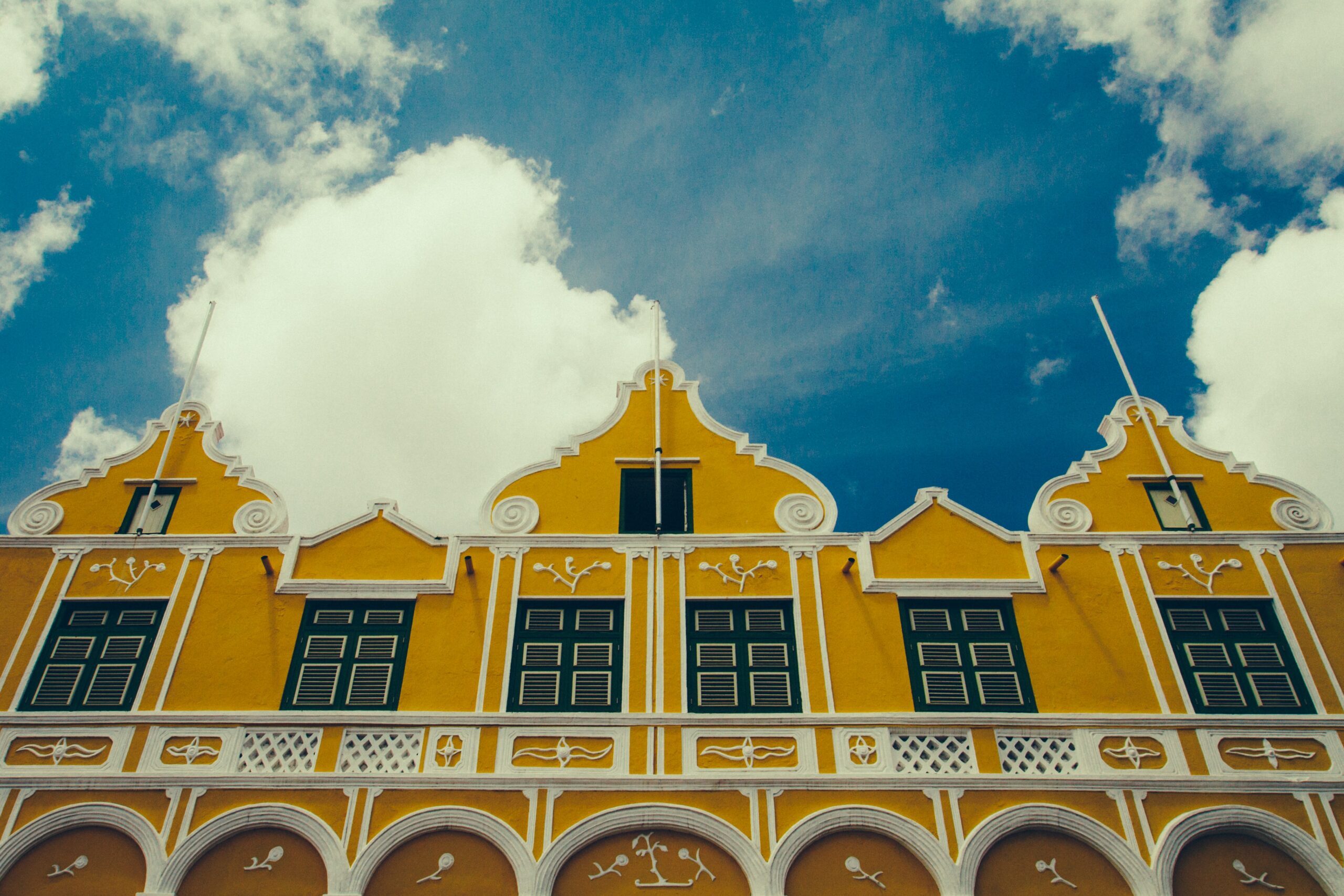


Benefits of Curacao Gaming License
The Curacao license has changed completely. Master licenses and sub-licenses no longer exist: since the National Ordinance on Games of Chance (LOK) took effect on 24 December 2024, every operator applies directly to the Curaçao Gaming Authority. All sub-licenses were revoked and the last master license expired on 31 January 2025. The entry cost is higher and the compliance bar is real — but so is the payoff: a globally recognised license, 0% tax on gaming revenue, full crypto compatibility, and one authorization covering casino, sportsbook, poker and lotteries.
Private Financial Services has guided gambling operators through Curacao licensing since the master-license era. We know both regimes and exactly what the CGA expects from an application in 2026. We have formulated and had approved the full procedures for obtaining the new license category and for transitioning existing companies — if you are still operating on legacy paperwork, reach out to our specialists, because the transition period is over and an old sub-license is not a valid license.
The company in Curacao and Curacao gaming license will allow:
Provide services of online casinos, sportsbooks, poker rooms, lotteries, bingo and live dealer games worldwide, except in restricted jurisdictions — one B2C authorization covers every vertical with no separate permit per product. (On request, our lawyers will provide a list of relevant countries);
Launch new games and products without prior review by the regulator, and add further domains under the same license for a small annual fee;
Connect payment solutions for accepting deposits and open current accounts for the company — direct CGA licensing, FATF-aligned AML standards and a public license register have measurably improved how banks and payment institutions treat Curacao licensees;
Accept deposits and withdrawals in cryptocurrency and run crypto-focused casino models without a separate virtual-asset license;
Hold intellectual property rights and carry on any business not prohibited by law and regulations;
Provide NFT-related games.

Documents Required
for Curacao Gaming License
As per the Anti-Money Laundering and Counter-Terrorism Financing Act and the CGA fit-and-proper review, every ultimate beneficial owner, director and key executive should submit the following information and documents:
A certified copy of the beneficiary’s and director’s passport;
A reference letter from the beneficiary’s and director’s bank;
A certified copy of the utility bills to confirm the beneficiary’s and director’s place of residence;
Beneficiary’s and director’s CV;
Organization chart of the beneficiary’s companies;
Clean criminal record certificates for all stakeholders;
Source of wealth and source of funds declarations;
Persons holding 10% or more receive enhanced scrutiny from the CGA.
Curacao Gaming License and Our Services
Private Financial Services has been in the corporate services market since 1998. Around 10 years ago we started providing comprehensive legal support for gaming companies. Our portfolio includes many obtained licenses in Curacao, Malta, Isle of Man, Kahnawake, and Estonia.
In several European countries, we were a member of working groups for the development of local regulations — and we have guided operators through the Curacao reform, from the master-license era to direct CGA licensing under the LOK.
2012
We help to get licenses for gambling since 2012
41+
We helped more than 41 companies to get a Curacao casino license
6–8
6–8 months – realistic period from engagement to a definitive CGA license under the LOK
Our services include, but not limited to the following:
We will assist you to register the Curaçao gaming company (B.V. or N.V.);
We will assist you to get the Curacao Gaming License directly from the CGA;
We shall provide the managing director, a resident of Curaçao;
We will provide a legal address and a local office for your company in Curaçao;
Providing a legal address and secretary service;
We will arrange the mandatory Curaçao server hosting for your core gaming infrastructure;
The Curacao license requires the preparation of an AML/CTF program that we will prepare for your project;
We shall help you to connect to the acquiring and open bank accounts;
We will help in the preparation of a business plan;
We will prepare and file the application through the CGA online portal, including the Personal History Disclosure Forms;
We shall deliver accounting and auditing services in Curaçao (The company is obliged to submit these reports annually);
Curacao license and company are often used in conjunction with a European company, if necessary, we will help to structure the project;
If necessary, we will help in registration of a trademark and intellectual property rights;
Need a gambling platform? We will help you choose the best one and arrange RNG and game certification with an accredited lab;
After the gambling license is obtained, we will be providing comprehensive support further, including CGA reporting and AML/CFT audits.

Old Rules vs New Rules
What Changed Under LOK
Until 2024, licensing ran through four private master license holders — Cyberluck (Curaçao eGaming), Gaming Curaçao and others — issuing sub-licenses under the 1993 offshore ordinance (NOOGH). That system is gone. The practical difference:
— Issuing authority. Before: four private master licensees. Now: the Curaçao Gaming Authority, directly.
— License types. Before: master license plus sub-licenses. Now: B2C for operators and B2B for suppliers.
— Application. Before: through a master licensee, informally. Now: online through the official CGA portal.
— Local substance. Before: minimal, a registered agent sufficed. Now: a local entity, a resident managing director and a local office.
— Server location. Before: anywhere. Now: at least one physical server in Curaçao.
— Validity. Before: tied to the master license term. Now: a provisional license of up to six months, extendable by six, then a definitive license for an indefinite period subject to compliance.
— Oversight. Before: fragmented and light-touch. Now: continuous CGA supervision, AML/CFT audits and annual reporting.
— Typical annual cost. Before: around €18,000–20,000 for a sub-license. Now: around €47,000–49,000 in government fees for a B2C license.
Provisional “Green Seal” arrangements for legacy holders have been wound down. If you are still operating on old paperwork, you are operating without a valid license.

License Types
B2C and B2B
B2C — the operator license. For companies offering games of chance directly to players: online casinos, sportsbooks, poker rooms, lottery and bingo platforms. It covers unlimited gaming verticals and multiple domains under a single authorization.
B2B — the supplier license. For companies supplying critical gaming services and goods: game studios, platform providers and aggregators. Under the LOK the supplier license obligation applies to suppliers established in Curaçao and takes effect two years after the ordinance entered into force, so B2B providers should be planning their licensing timeline now.
Sub-licenses and white-label “license rentals” are no longer legally possible. Any provider still offering them is selling you a compliance problem.

Company and Substance
Requirements in 2026
To qualify for a CGA license, the applicant must have:
— A Curaçao legal entity, typically a B.V. or N.V., with its statutory seat in Curaçao and registration with the Chamber of Commerce;
— At least one resident managing director: a natural person residing in Curaçao, or a Curaçao corporate director with a resident managing director;
— A local office and business presence meeting economic substance expectations;
— At least one physical server in Curaçao hosting the core gaming infrastructure — transaction data and RNG systems — so the CGA can audit operations directly. Cloud components may serve the frontend, but the core must be in-jurisdiction;
— Full UBO disclosure and fit-and-proper clearance for every ultimate beneficial owner, director and key executive;
— An AML/CFT and KYC framework aligned with FATF standards: player identity verification, transaction monitoring, suspicious activity reporting and a designated compliance function;
— Responsible gaming controls: age verification (18+), self-exclusion tools, deposit limits and rejection of players from restricted jurisdictions;
— Certified gaming content: RNG and game fairness certification from an accredited lab such as GLI or BMM, plus documented Terms of Use and proof of domain ownership.

How to Get a Curacao
Gaming License
— Scoping and gap analysis. Define the business model (B2C or B2B), target markets and corporate structure; identify missing documents (1–2 weeks).
— Incorporate the Curaçao entity. Form the B.V. or N.V., appoint the resident managing director, register the office (2–4 weeks).
— Prepare the application package. Corporate documents, UBO and KYC files, AML and responsible gaming policies, business plan, game descriptions, terms and conditions, RNG certificates (3–6 weeks).
— Submit via the CGA online portal. Complete the Online Gaming Application Form, the Business and Corporate Information Form and the Personal History Disclosure Forms; pay the application and due diligence fees (1 week).
— CGA due diligence. Background checks on all qualifying persons, financial vetting, possible director interviews and information requests (2–4 months).
— Provisional license, where granted. Valid up to six months and extendable by six more, allowing you to finalise infrastructure while working towards full compliance.
— Technical deployment. Install the Curaçao server, integrate payments and the iGaming merchant account, implement the CGA dynamic license seal on approved domains (3–6 weeks, in parallel).
— Definitive license and launch. Issued for an indefinite period, subject to ongoing supervision, annual fees and reporting.
Realistic total timeline: 6–8 months from engagement to definitive license. A complete, well-prepared application is the single biggest factor in avoiding delays — most rejections and slowdowns trace back to incomplete UBO files or missing policies. If an application is rejected, an objection or appeal must generally be filed within six weeks.

Curacao Gaming License
Cost 2026
Government fees, B2C first and B2B second:
— Application fee, one-time and non-refundable — €4,592 (ANG 9,000) for both B2C and B2B;
— Due diligence fee — approximately €150 per UBO, €128 per qualifying shareholder and €2,551 for exchange-listed UBOs, on the same schedule for both license types;
— Annual license fees — approximately €47,450 a year for B2C, made up of a treasury levy of about €24,490 and a CGA supervision fee of about €22,960; approximately €24,490 a year for B2B;
— Additional domains — approximately €250 per domain per year, with unlimited domains allowed under a B2C license;
— Corporate income tax — around 2% effective with proper structuring, 0% tax on gross gaming revenue and no VAT on cross-border services.
Beyond government fees, budget for company formation and resident director services, a local office, the mandatory Curaçao server hosting (typically €500–2,000 and above per month depending on setup), RNG and game certification (from about €2,500), AML and policy drafting, and legal support. A realistic all-in first-year budget for a B2C operator is €75,000–100,000 and above, depending on structure and infrastructure choices.
Fees are set in Antillean guilders and converted at indicative rates, and the CGA revises its schedules periodically. We verify current figures before every application.

Curacao Gambling License
Important Information
A gambling license in Curaçao does not imply a division into types of activities. The casino license and the bookmaker license are combined into one and allow you to provide all possible types of gambling, including sports betting and betting on other events, poker, lotteries, bingo, live dealer and other games. You can launch with slots and add a sportsbook later — no new permits and no re-application — and games go live without prior review by the regulator, which is a decisive operational advantage over Malta and the Isle of Man.
A company in Curaçao is also attractive from a tax perspective: there is no tax on gross gaming revenue, no VAT on cross-border services, and corporate income tax on net profit can be structured to an effective rate of around 2%. Compared with Malta’s compliance overhead and tax stack, the total cost of ownership remains one of the lowest among recognised jurisdictions.

Curacao Gambling License
Disadvantages
Unfortunately, in the field of gambling there are practically no ideal solutions, and a company in Curaçao also has disadvantages. The Curacao license does not give access to regulated markets — the Netherlands, the USA, France, Australia and other jurisdictions that license operators locally — and geo-blocking of restricted countries is mandatory.
The “cheap and instant” Curacao of 2022 no longer exists. Budget realistically and expect genuine due diligence on every UBO. A casino license in Curaçao still carries less weight than one from Malta or the Isle of Man, but it remains many times cheaper both to obtain and to maintain, which for most operators more than compensates for the shortcomings.
And if your project is a minimal-budget test launch, a direct Curacao license may simply be oversized. Talk to us about staging options — a Costa Rica setup can validate the business model in a few weeks for a fraction of the cost — before you commit the budget.

Curacao vs Malta
vs Isle of Man
One of the most frequently asked questions among beginners is where it is better to license a project: Curaçao, the Isle of Man or Malta? If you are just starting out, and this is your first experience of conducting a licensed activity, we still recommend starting from Curaçao. Main reasons:
— Timelines. Creating the structure, preparing for licensing and having the application reviewed by the regulator takes on average 14–18 months in Malta and 6–9 months in the Isle of Man. Curaçao runs 6–8 months end to end under the LOK, with a provisional license possible earlier.
— Substance. Malta and the Isle of Man impose demanding requirements for local employees, infrastructure and share capital. Curaçao now requires real substance too — a resident managing director, a local office and a server in the jurisdiction — but the bar remains materially lower.
— Cost. Building a full-fledged structure and obtaining a casino license in Malta starts on average from €80,000 with a minimum monthly cost of €7,000. A Curaçao B2C license costs about €47,450 a year in government fees, with a realistic all-in first year of €75,000–100,000.
— Compliance. In Malta and the Isle of Man the requirements are stricter: you will go through an in-depth due diligence process and provide considerably more documents.
— Product velocity. A casino license in Malta or the Isle of Man will not allow you to launch new games and products quickly: each one requires preliminary review by the supervisory authority and can only go live after approval. In Curaçao games go live without prior review.
— Risk appetite. In Malta and the Isle of Man you will have to moderate your risk appetite in terms of onboarding players, since European and British AML/CFT standards are stricter than Curaçao’s even after the LOK reform.
— Crypto. Curaçao remains the priority for projects related to cryptocurrency, tokens, NFTs and other virtual assets: in Malta you would have to obtain an additional expensive license, and in the Isle of Man you face restrictions on currencies and their movement.
Having had your business model tested in Curaçao, you can safely proceed to consider other jurisdictions for your gaming project licensing.
Why is it worth contacting us? We know the gambling industry from the inside. Our team has lawyers with experience in gambling companies around the world who understand the needs of clients. We interact with regulators and supervisors on a daily basis, which allowed us to formulate and approve the procedures for the new CGA license category before most of the market had read the ordinance.
Private Financial Services also has a wide network of partners — by contacting us, you will receive all services in one place, from legal structuring, licensing and financial planning to the software, accounts, processing and all other related services. During our existence, we have helped many online casinos and bookmakers to reach the international level within the legal framework.
To receive a commercial offer and prices, please contact our specialists.
Get a personal offer!
FAQ (Frequently Asked Questions)
1. What is a Curacao Gambling License?
A Curacao gaming license is a permit issued by the Curaçao Gaming Authority that allows a locally incorporated company to offer online gambling worldwide, except in restricted jurisdictions. One license covers all iGaming verticals — online casino, sports betting, poker, lotteries, bingo, live dealer games and crypto gaming — with no separate permit per product. Licensing has been governed by the National Ordinance on Games of Chance (LOK) since 24 December 2024.
2. Do master licenses and sub-licenses still exist?
No. The system of four private master license holders issuing sub-licenses is gone. All sub-licenses were revoked and the last master license expired on 31 January 2025. The only valid Curacao license today is one issued directly by the CGA. Sub-licenses and white-label “license rentals” are no longer legally possible, and any provider still offering them is selling you a compliance problem.
3. Can I trust a Curacao Gaming License?
Curacao gambling licenses have been issued since 2002 and many companies successfully use them. Since the LOK reform the standing of the license has improved: direct CGA licensing, AML standards aligned with FATF and a public license register have measurably changed how banks and payment institutions treat Curacao licensees.
4. How do I get a gambling license in Curacao?
You must first establish a Curaçao legal entity, typically a B.V. or N.V., with its statutory seat in Curaçao, appoint at least one resident managing director, register a local office and host at least one physical server in Curaçao. The application is then submitted through the CGA online portal together with a business plan, financial projections, internal rules and procedures, AML and responsible gaming policies, full UBO files and RNG certificates.
5. How much does it cost to get a gambling license in Curacao?
Government fees for a B2C license are a one-time application fee of about €4,592 plus roughly €47,450 a year — a treasury levy of about €24,490 and a CGA supervision fee of about €22,960. A B2B license costs about €24,490 a year. Due diligence is charged at about €150 per ultimate beneficial owner, and additional domains at about €250 each per year. A realistic all-in first-year budget for a B2C operator is €75,000–100,000 and above, including company formation, resident director, local office, server hosting, certification and legal support.
6. How long does it take to get a gambling license in Curacao?
A realistic total is 6 to 8 months from engagement to a definitive license. A provisional license valid for up to six months and extendable by a further six may be granted earlier, allowing you to finalise infrastructure while working towards full compliance. A complete, well-prepared application is the single biggest factor in avoiding delays.
7. Who regulates Curaçao gaming companies?
The Curaçao Gaming Authority regulates gambling companies and, since the LOK entered into force on 24 December 2024, issues all licenses directly. Supervision is continuous and includes AML/CFT audits and annual reporting.
8. Can I accept cryptocurrencies as a payment method?
Yes. The CGA framework accommodates cryptocurrency deposits and withdrawals and crypto-focused casino models without a separate virtual-asset license — a decisive advantage over Malta, where an additional authorization is required, and the Isle of Man, where currency movement is restricted.
9. Which markets can I not serve with a Curacao license?
A Curacao license does not give access to regulated markets such as the United States, the Netherlands, France, Australia and other jurisdictions that license operators locally. Geo-blocking of restricted countries is mandatory.
10. How can I get more information?
Private Financial Services has been in the corporate services market since 1998 and has supported gaming companies for around ten years, with licenses obtained in Curacao, Malta, the Isle of Man, Kahnawake and Estonia. We provide a full range of corporate services, including company registrations, bank accounts, license assistance, cryptocurrency and fintech projects, the gambling industry, and much more.
The Private Financial Services team will be happy to discuss matters in more detail.